


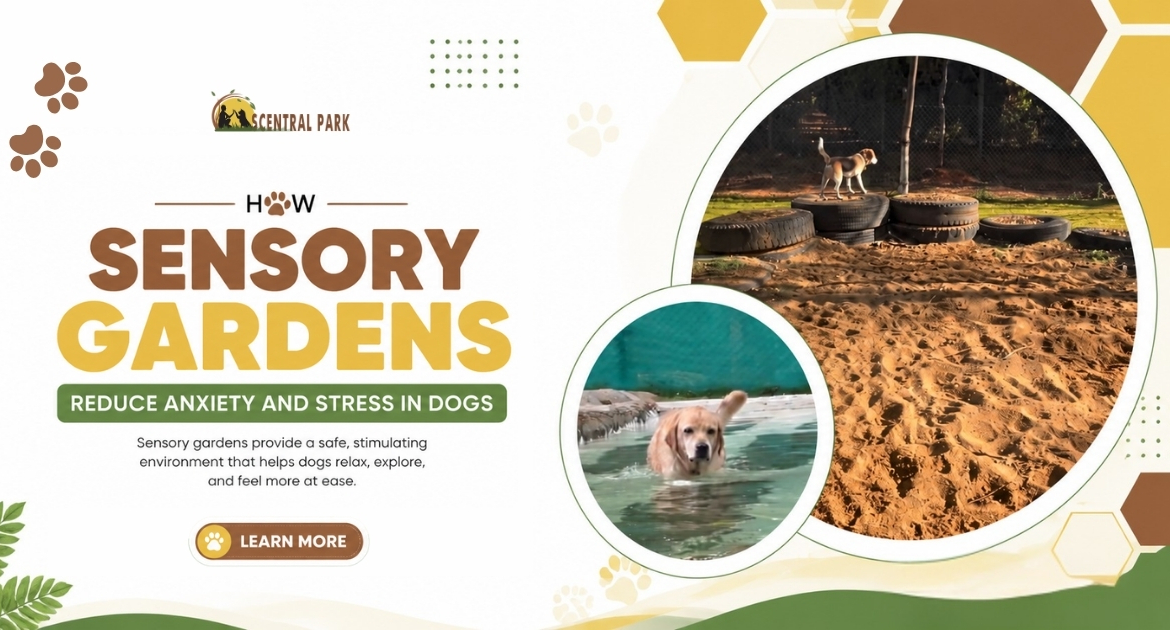
Dogs experience the world through their noses, ears, eyes, paws and even their sense of taste. Yet many city dogs spend most of their time indoors or walking on familiar pavements. A sensory garden for dogs offers something different: natural surroundings where they can sniff, explore, move and investigate at their own pace.
Regular exposure to varied environments can make daily life more interesting and may help dogs manage boredom, nervousness and stress.
What Is a Sensory Garden for Dogs?
A sensory garden dogs can explore is designed around natural sights, smells, sounds and textures. Instead of relying mainly on toys, it encourages behaviours such as sniffing, walking, investigating and exploring.
Scentral Park describes its sensory garden as an off-leash environment with elements including water, plants, sand and wood textures. Its 30,000-square-foot space gives dogs room to experience different surroundings safely.
How Sensory Garden Dogs Benefit from Exploration
It Gives Their Minds Something to Do
Mental stimulation matters just as much as physical exercise. New scents, surfaces and sights encourage dogs to process information and make choices about where they want to explore.
These experiences can complement regular walks and dog stimulation activities, particularly for dogs living in apartments or busy urban areas.
It Encourages Natural Behaviours
Sniffing, investigating and exploring are natural behaviours for dogs. A sensory garden that dogs can move through freely gives them opportunities to follow scents, examine plants and experience different textures without constantly being directed by their humans.
This freedom can make outdoor time more engaging and satisfying.
It Can Support Confidence
New experiences introduced in a safe and controlled way can help dogs become more comfortable with unfamiliar surroundings. Scentral Park also offers puppy sessions designed around exposure to different textures, sounds, smells and sights.
For nervous dogs, a quieter setting can be particularly useful. Individual sessions can allow them to explore without the pressure of a busy group.
Sensory Gardens and Dog Enrichment Activities
Good dog enrichment activities do not always need toys or complicated games. Allowing a dog to sniff a new area, investigate a surface or spend time around natural surroundings can provide valuable mental engagement.
Scentral Park’s sensory garden specifically encourages interaction with nature rather than relying on toys or training aids. Its garden is designed to let dogs explore natural elements independently.
Can Sensory Gardens Help with Anxiety?
A sensory garden is not a treatment for every form of anxiety, but a suitable environment can support calmer behaviour by giving dogs opportunities to explore at their own pace.
Supervised social experiences can also help some dogs. Scentral Park limits shared sessions to a maximum of five dogs and considers compatibility and social behaviour, rather than forcing dogs to interact. If your dog shows persistent fear, severe anxiety or sudden behavioural changes, speak to a qualified veterinary professional or behaviourist.
Choosing Dog Stimulation Activities for Your Pet
Every dog responds differently. Some enjoy social interaction, while others prefer quiet exploration. Puppies may benefit from controlled new experiences, while senior dogs may need gentler, low-impact activities.
The best dog stimulation activities match your dog’s age, temperament, energy level and comfort. Watch their body language and allow them to take breaks when needed.
Building a Calmer Routine
You can include sensory experiences in everyday life through varied walking routes, safe sniffing opportunities and supervised outdoor exploration. These simple dog enrichment activities add variety without making your dog’s routine complicated.
A sensory garden can take this idea further by bringing different natural elements together in one secure environment.
Conclusion
FAQs
Dogs need opportunities to explore, sniff, move and experience more than the same surroundings every day. A sensory garden dogs can enjoy may provide mental stimulation, physical activity and space for natural behaviours, which can support overall emotional wellbeing. Scentral Park brings these experiences together in a thoughtfully designed environment for dogs and their families.
1. How does a sensory garden help anxious dogs?
A sensory garden dogs can explore at their own pace may provide a calmer alternative to crowded environments. Natural scents, textures and sounds encourage investigation without demanding constant interaction. However, dogs with severe anxiety may need professional behavioural or veterinary support.
2. What are good dog stimulation activities?
Sniffing walks, exploring new safe environments and supervised socialisation are useful dog stimulation activities. You can also introduce different textures and natural surroundings. Choose activities based on your dog’s age, confidence, physical ability and individual preferences rather than forcing unfamiliar experiences.
3. Are sensory gardens suitable for puppies?
Yes, controlled sensory experiences can help puppies become familiar with different sights, sounds, smells and textures. Scentral Park offers puppy sessions specifically designed around exploration and socialisation. Keep experiences positive, short and appropriate for your puppy’s age and vaccination status.
4. Can dog enrichment activities reduce boredom?
Yes, varied dog enrichment activities can give pets opportunities to think, explore and use natural behaviours. Sniffing, investigating new surroundings and supervised play can add variety to daily routines. Regular enrichment may also help reduce boredom-related behaviours in some dogs.
5. Should every dog socialise in a sensory garden?
Lorem ipsum dolor sit amet, consectetur adipiscing elit. Ut elit tellus, luctus nec ullamcorper mattis, pulvinar dapibus leo.